Ancient Stone Tool Discovery
A Glimpse into Prehistoric Technology
I discovered this simple yet fascinating prehistoric tool. While holding it in my hands I feel a strong tangible connection to the people who once inhabited this landscape thousands of years ago.
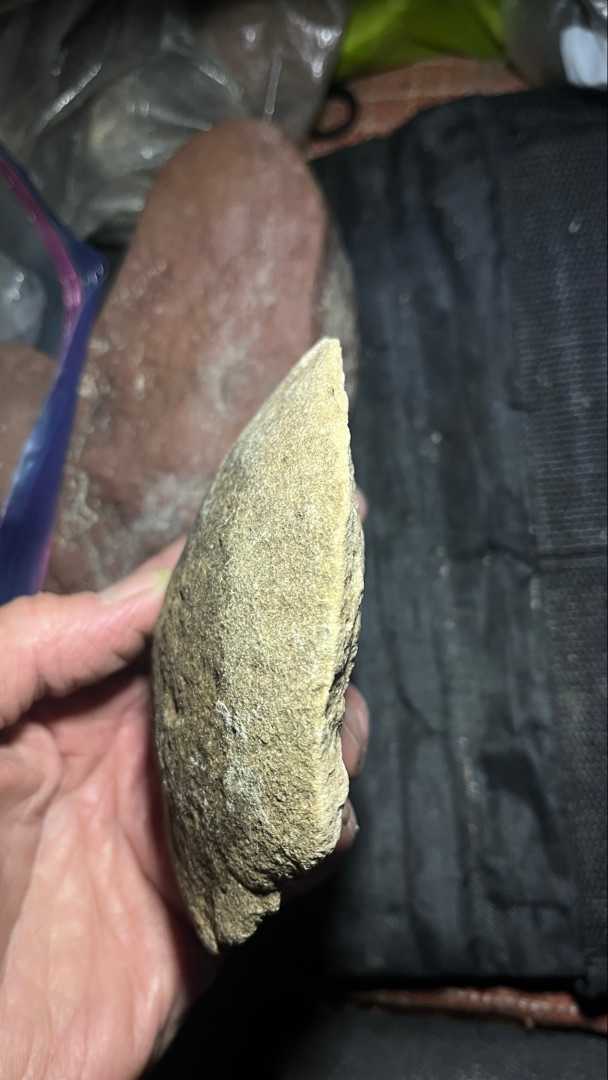
The symmetrical shape and pointed end suggested human craftsmanship rather than natural formation. Upon closer inspection, the evidence of intentional shaping became increasingly apparent.


What makes this artifact particularly interesting is the evidence of deliberate flaking along the edges. These aren't random breaks but show the hallmarks of controlled percussion—where small, precise chips of stone were removed to create useful working edges. The stone appears to be a form of sedimentary rock, which was often favored for tool-making for its workability and the weathered surface maintains clear evidence of intentional shaping consistent with prehistoric technolog
The tool fits comfortably in the hand, suggesting ergonomic design considerations by its maker. Based on its shape and characteristics, it appears to be a scraper—a multi-purpose tool used by prehistoric peoples for processing hides, shaping wood, and harvesting plant materials. The working edge shows signs of careful preparation to create an effective surface for these activities.
Dating such artifacts without laboratory analysis is challenging, but typologically similar tools were common throughout the Upper Paleolithic period (roughly 40,000-10,000 years ago). This timeframe saw significant refinement in stone tool technology as humans developed more specialized implements for specific tasks.

Finding tangible evidence of human activity from thousands of years ago provides a profound sense of connection to those who came before us. It's remarkable to hold something shaped by human hands so long ago—a reminder that people have been modifying their environment with tools and technology for millennia.
#ArchaeologicalFinds #PrehistoricTools #CulturalHeritage #FieldDiscovery